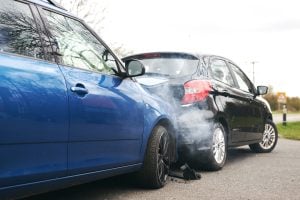
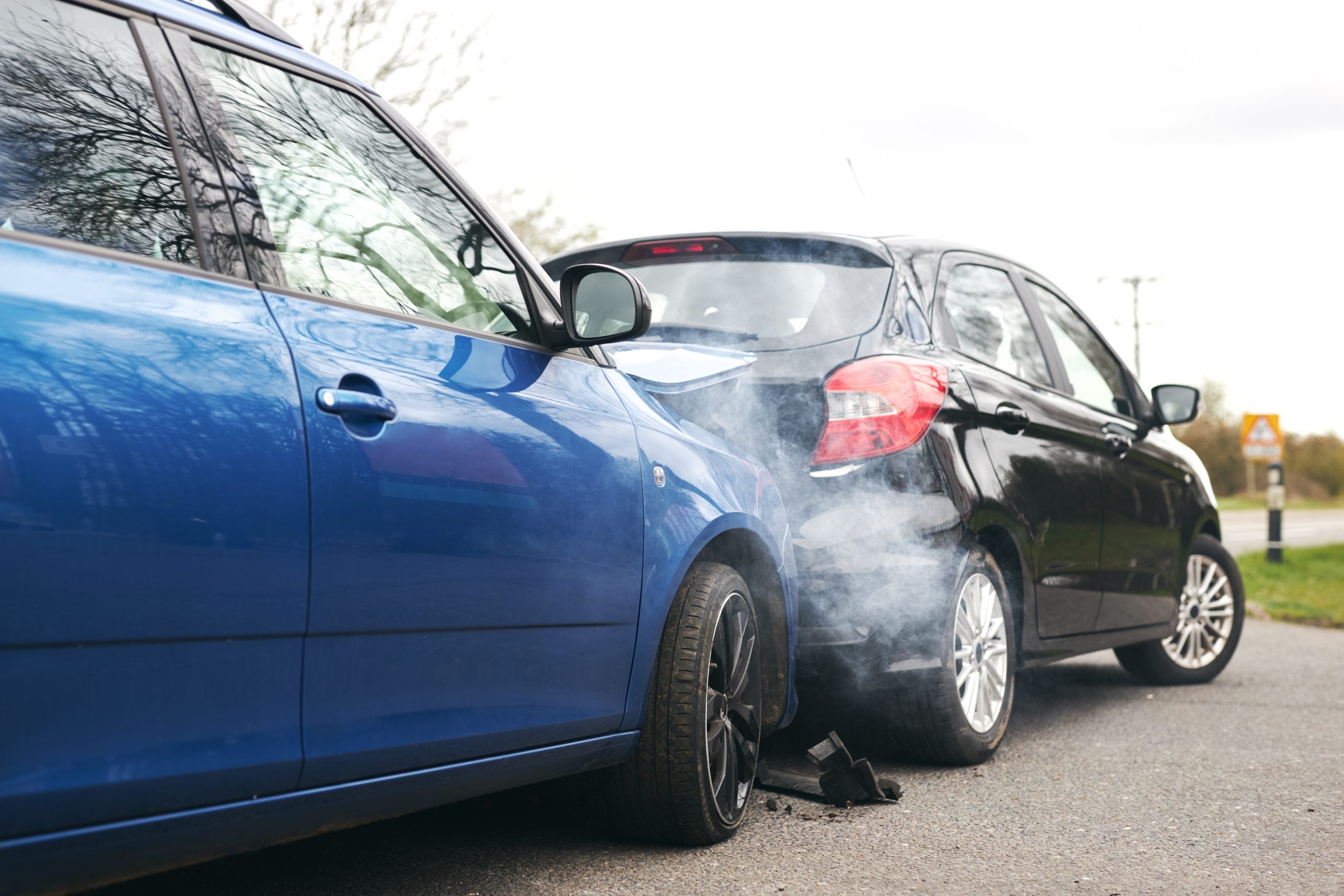
Rear-end accidents are among the most common types of motor vehicle crashes on Ohio roadways. From congested interstate traffic near Cleveland to stop-and-go driving in suburban communities, these collisions can happen quickly and often leave drivers with questions about responsibility.
If you have been involved in a rear-end crash, one of the first concerns is likely: Who is at fault under Ohio law? While many people assume the driver in the back is automatically responsible, the legal analysis can be more nuanced depending on the circumstances.
 Why Rear-End Accidents Are So Common

Rear-end collisions often occur in situations involving:
- Sudden stops in heavy traffic
- Distracted driving
- Following too closely
- Weather-related braking issues
- Traffic signal changes
- Construction zones
Because these crashes frequently involve one vehicle striking the back of another, they may appear straightforward. However, determining legal fault requires examining the facts and applying Ohio traffic laws.
Ohio’s Assured Clear Distance Rule
A key legal principle in many rear-end accident cases is Ohio’s “assured clear distance ahead” rule.
Under Ohio law, drivers must maintain enough distance from the vehicle in front of them so they can stop safely if traffic slows or stops. This rule essentially requires drivers to:
- Travel at a safe speed
- Keep a reasonable following distance
- Maintain control of their vehicle
- Be prepared for traffic conditions
When a driver fails to stop in time and strikes the vehicle in front of them, that driver is often considered to have violated the assured clear distance rule.
In many rear-end collisions, this creates a presumption that the rear driver is at fault. However, this presumption is not automatic or absolute.
Is the Rear Driver Always at Fault?
In most cases, the rear driver is found responsible. However, Ohio law does not impose automatic fault in every rear-end accident. There are situations where fault may be shared or where the lead driver’s actions contributed to the crash.
Examples of factors that may affect fault include:
- A lead driver making an abrupt stop without a valid reason
- Brake lights that were not functioning
- A vehicle reversing unexpectedly
- Sudden lane changes without proper signaling
- Mechanical failure
Each accident must be evaluated based on the specific facts. Law enforcement officers, insurance adjusters, and sometimes courts review evidence such as:
- Police reports
- Witness statements
- Vehicle damage patterns
- Traffic camera footage
- Dashcam recordings
- Road and weather conditions
Because fault impacts compensation, it is important not to assume liability without understanding how Ohio law applies to your case.ki
Comparative Negligence in Ohio
Ohio follows a modified comparative negligence system. This means that fault can be shared between drivers.
Under Ohio’s rule:
- An injured party can recover compensation as long as they are not more than 50% at fault.
- If they are 51% or more responsible, they cannot recover damages.
- If they are partially at fault (50% or less), their compensation is reduced by their percentage of fault.
For example, if a driver is found 20% at fault and awarded damages, the recovery would be reduced by 20%.
In rear-end accidents, comparative negligence may apply if both drivers contributed in some way. This is why a detailed investigation is often necessary.
Common Causes of Rear-End Accidents
Understanding what typically causes these crashes helps clarify how fault is determined.
1. Distracted Driving
Drivers who text, adjust navigation systems, or engage in other distractions may fail to notice slowing traffic. If distraction leads to a collision, the distracted driver is generally considered responsible.
2. Following Too Closely
Tailgating reduces reaction time. Even in normal traffic flow, inadequate following distance can result in a collision if the lead vehicle brakes.
3. Speeding
Driving at excessive speeds increases stopping distance. If speeding prevents a driver from stopping in time, fault typically rests with that driver.
4. Weather Conditions
Rain, snow, or ice can extend braking distances. However, poor weather does not excuse drivers from maintaining control. Ohio drivers are expected to adjust speed and following distance to match road conditions.
5. Sudden Stops
Not all sudden stops create liability for the rear driver. If a lead vehicle stops abruptly for a legitimate reason — such as traffic, pedestrians, or hazards — the rear driver is still generally expected to stop safely.
However, if a driver stops without cause in a travel lane, this could complicate fault analysis.
Multi-Vehicle Rear-End Collisions
Chain-reaction crashes often occur on highways or in heavy traffic. These situations can involve multiple vehicles and layered impacts.
In these cases, fault may be divided among several drivers depending on:
- Who initiated the collision
- Whether subsequent drivers maintained safe following distances
- Road and visibility conditions
Each impact may be analyzed separately. For example, one driver may be responsible for the first collision, while another driver could be responsible for a secondary impact.
Injuries Common in Rear-End Accidents
Even low-speed rear-end crashes can cause injuries. Some of the most common include:
- Whiplash
- Neck and back injuries
- Concussions
- Soft tissue injuries
- Herniated discs
Because symptoms may not appear immediately, it is important for accident victims to seek medical attention promptly after a collision.
Medical documentation also plays a key role in insurance claims and potential legal cases.
What to Do After a Rear-End Accident in Ohio
If you are involved in a rear-end collision, consider taking the following steps:
- Check for injuries and seek medical care.
- Call law enforcement to create an official accident report.
- Exchange information with the other driver.
- Document the scene, including vehicle damage and road conditions.
- Avoid admitting fault at the scene.
- Notify your insurance company.
- Consult with an experienced personal injury attorney if injuries or disputes arise.
Statements made at the scene can later be used in insurance investigations or legal proceedings, so it is important to communicate carefully.
The Role of Police Reports
Police reports can significantly influence how fault is determined. Officers may:
- Issue citations
- Document statements
- Diagram the crash
- Note road conditions
However, police reports are not final determinations of legal liability. Insurance companies and courts may consider additional evidence beyond the officer’s initial observations.
 Why Legal Guidance Matters
Rear-end accidents may appear simple, but fault disputes can become complex, particularly when:
- Injuries are serious
- Fault is contested
- Multiple vehicles are involved
- Insurance companies disagree
- Comparative negligence is alleged
An experienced Ohio personal injury attorney can:
- Investigate the accident
- Review traffic laws and evidence
- Communicate with insurance companies
- Advocate for fair compensation
- Represent clients in court if necessary
Legal counsel helps ensure that your rights are protected throughout the process.
Understanding Rear-End Accidents in Ohio
If you have been injured in a rear-end collision and have questions about your rights, speaking with a knowledgeable attorney can provide clarity and direction.
For more information or to discuss your situation, contact us at: Steuer, Escovar & Coleman Co. LPA or call (216) 771-8121.